Authors: Fraser P. McCready, Kartik S. Pradeepan, Milad Khaki, Wei Wei, Marta Guevara-Ferrer, Nicole Matusiak, Britney Feng, Alina Piekna, Julio Martinez-Trujillo, and James Ellis
Stem Cell Reports, 20 November 2025
Variants in the SHANK2 gene are strongly linked to autism spectrum disorder (ASD), yet the functional impact of these mutations on developing neural networks remains difficult to study in human-relevant systems. To address this, researchers in this study generated iPSC-derived neurons carrying SHANK2 variants and examined how these alterations influence network activity and responsiveness to pharmacological modulation.
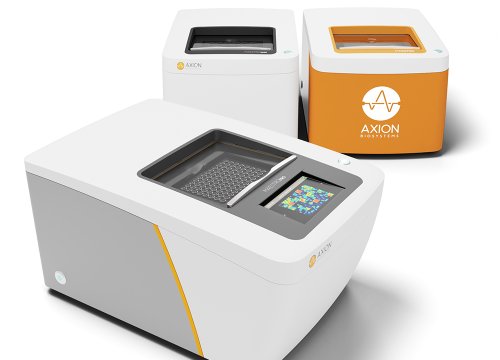
Using Axion BioSystems’ noninvasive Maestro MEA platform, the team recorded spontaneous electrical activity from SHANK2-mutant and control networks. Neurons carrying the SHANK2 R841X variant displayed hypersynchronous firing and altered network burst dynamics, consistent with circuit-level disruptions observed in ASD. Remarkably, activating mGluR5 with the agonist DHPG selectively normalized several of these abnormalities—reducing burst frequency and altering burst duration—while leaving control networks unaffected.
These findings provide new insight into how SHANK2 mutations perturb neural circuitry and demonstrate that mGluR5 activation can partially rescue these network-level phenotypes. The study also highlights the power of human iPSC models and MEA-based functional assays for identifying therapeutic pathways in ASD.