Authors: Na Kyeong Park, Jaewoo Park, Yun-Gwi Park, Hyung-Kyu Choi, Soon-Jung Park, Inkyu Moon, and Sung-Hwan Moon
Journal of Advanced Research, 03 May 2026
Maestro MEA reveals genotype-specific electrophysiological responses to quinidine in an animal-free cardiac safety testing model.
As the pharmaceutical industry increasingly adopts New Approach Methodologies (NAMs) and other animal-free testing strategies, researchers are seeking human-relevant models that can detect cardiac liabilities earlier and with greater predictive relevance. In this study, the authors developed a precision medicine–based, multimodal in vitro platform to evaluate genotype-specific cardiotoxicity in human iPSC-derived cardiomyocytes, integrating microelectrode array (MEA), patch clamp, and digital holographic imaging (DHI) readouts.
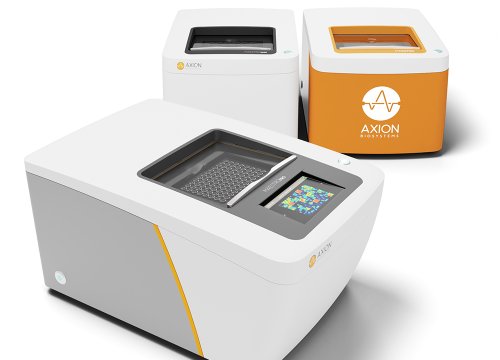
To test the platform, the team exposed control and long QT syndrome (LQTS) cardiomyocytes to quinidine, a compound known to affect cardiac conduction and repolarization. Using Axion BioSystems’ Maestro MEA platform, they measured field potential duration (FPD), corrected field potential duration (FPDc), beat period, and spike amplitude to characterize electrophysiological responses across increasing drug concentrations. In control cardiomyocytes, quinidine produced concentration-dependent reductions in spike amplitude and increases in FPD/FPDc, while electrical activity remained detectable at higher concentrations. In LQTS cardiomyocytes, activity was lost at lower quinidine concentrations, consistent with genotype-specific susceptibility to conduction failure.
Importantly, the multimodal approach also revealed differences in when and how toxicity appeared across readouts. Digital holographic imaging detected early mechanical abnormalities that preceded electrophysiological dysfunction, showing that cardiac safety risk may emerge first as altered contractile behavior before progressing to measurable electrical disruption. Together, the integrated MEA–patch clamp–DHI framework improved the ability to detect and contextualize quinidine-induced cardiotoxicity across genetic backgrounds, supporting more reproducible, human-relevant, and animal-free cardiac safety assessment.