Authors: Yuki Seki, Ikue Mihara, Taroumaru Okawa, Atsuko Ojima, Kazumasa Aoyama, Masaki Mikamoto, Yuka Morimitsu, Takeo Kamakura, Yasuaki Goto, Aoi Odawara, Yukiko Oshiro, Tomohiko Taniguchi, Motohiro Shiotani, Takashi Yoshinaga, Shoji Asakura, Yuto Ishibashi, Naoki Matsuda, Ikuro Suzuki, and Norimasa Miyamoto
Toxicological Sciences, 25 March 2026
Maestro Pro MEA recordings help predict seizure risk from fluoroquinolone–NSAID drug interactions by detecting increased network burst frequency.
Seizure liability is a major challenge in drug development, and drug–drug interactions can be especially difficult to evaluate using animal models because of the number of possible compound combinations. In this study, researchers assessed interactions between fluoroquinolone antibiotics and felbinac, the active metabolite of the NSAID fenbufen, to determine whether in vitro MEA recordings could help predict combination-driven seizure risk.
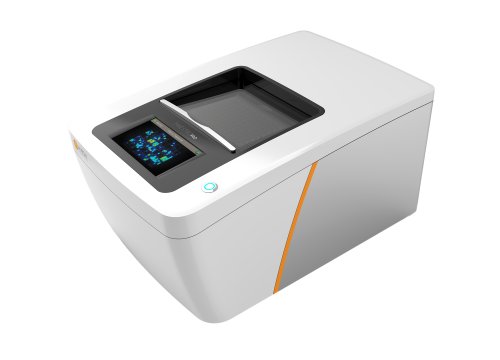
Using the Maestro Pro MEA platform, the team recorded activity from primary cultured rat cortical neurons and analyzed network burst frequency (NBF), a previously established marker of seizure risk. Felbinac alone did not alter NBF, but when combined with felbinac, six fluoroquinolones—including enoxacin, norfloxacin, ciprofloxacin, lomefloxacin, prulifloxacin, and ulifloxacin—significantly increased NBF. Principal component analysis using 17 MEA parameters further supported a GABA antagonism-related mechanism of action.
Together with human GABAA receptor patch-clamp data and rat in vivo convulsion studies, these results demonstrate how MEA assays can help identify seizure liability associated with specific drug combinations. The study highlights the value of in vitro neural activity assays for screening complex drug–drug interaction risks earlier in development, where testing every possible combination in vivo would be impractical.